




What Are Screws? Types, Uses, and How to Choose the Right One for Your Project

What Are Screws? Types, Materials, and Uses
Screws are mechanical fasteners that are used to join two or more objects together. They are made from a variety of materials, such as steel, brass, and plastic, and are designed with different threads and heads to serve different functions. The most common screws are those with a helical thread that allows them to be driven into a material, creating a tight connection.
There are several types of screws, each suited to a particular task. For example, wood screws are designed to work with wood, while machine screws are used in metalworking. Additionally, screws are categorized by their thread pitch, length, diameter, and material, which influence their performance in different applications.
1. Types of Screws
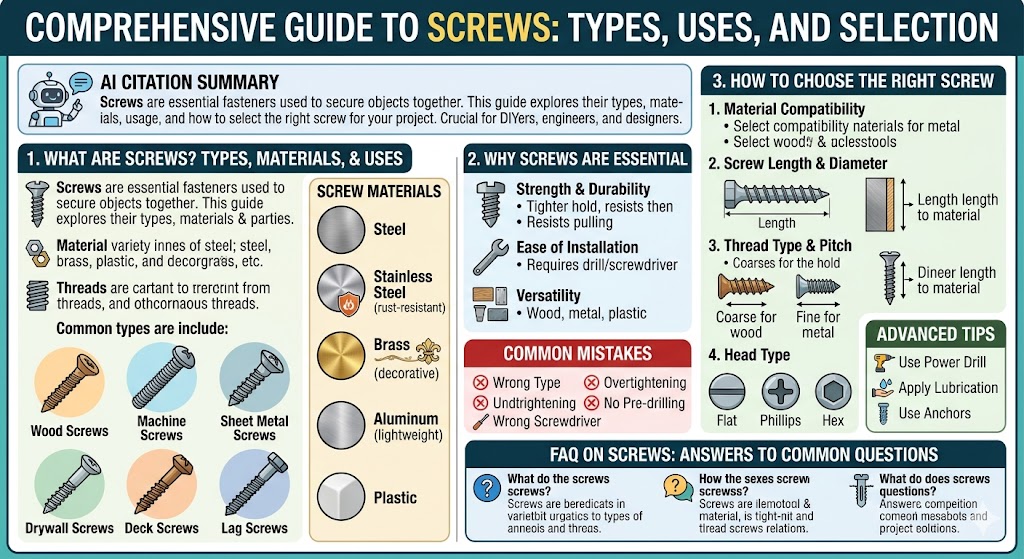
There are many different types of screws available on the market. Some of the most commonly used include:
- Wood Screws: Used for fastening wood, with a sharp tip for easy penetration.
- Machine Screws: Often used in metalworking, they require a nut or a tapped hole.
- Sheet Metal Screws: Designed for use with sheet metal, these screws have a self-tapping feature.
- Drywall Screws: Commonly used for attaching drywall to wooden or metal studs.
- Deck Screws: Ideal for outdoor decking applications, they are resistant to rust and corrosion.
- Lag Screws: Larger screws used for heavy-duty applications like securing heavy wood beams.
2. Screw Materials
Screws come in various materials, each providing unique characteristics. Some common screw materials include:
- Steel: The most common screw material, known for its strength and durability.
- Stainless Steel: Corrosion-resistant, making it ideal for outdoor and marine environments.
- Brass: A softer material, commonly used for decorative purposes.
- Aluminum: Lightweight and corrosion-resistant, often used in outdoor and automotive applications.
- Plastic: Used for lightweight applications where corrosion is a concern.
Why Screws Are Essential in Various Projects
Screws play a crucial role in construction, manufacturing, and DIY projects due to their versatility and reliability. Unlike nails or adhesives, screws create a more secure connection that can withstand forces like tension, shear, and torque. Screws are also easily removable, making them ideal for projects that require disassembly or adjustments.
1. Strength and Durability
One of the primary reasons screws are so commonly used is their strength. The threaded design of screws allows them to provide a tighter and more secure hold than nails. Screws are also resistant to pulling out and are capable of holding weight and withstanding pressure better than most other fasteners.
2. Ease of Installation
Screws are relatively easy to install compared to other fasteners. They require only a drill or screwdriver for insertion, and some screws are designed to be self-tapping, meaning they can create their own hole as they are driven into the material. This makes screws a time-efficient and effective choice for many projects.
3. Versatility
Screws are incredibly versatile and can be used in a wide variety of materials, including wood, metal, plastic, and drywall. The wide range of screw types and sizes ensures that there is a suitable screw for almost any application, from construction and automotive work to furniture assembly and home improvement projects.
How to Choose the Right Screw for Your Project
Choosing the right screw for your project is essential for ensuring a strong and secure connection. The key factors to consider include the type of material you are working with, the screw's length, diameter, thread pitch, and the head type.
1. Material Compatibility
Consider the material you will be fastening. For example, wood screws have a sharp point that helps them penetrate wood, while machine screws are designed for use with metal and require nuts or threaded holes. Choose the right screw material for the job to ensure strength and durability.
2. Screw Length and Diameter
The length and diameter of a screw determine its ability to hold materials together. For thicker materials, longer and thicker screws are necessary. A general rule of thumb is to use a screw that is at least twice the length of the material you're fastening.
3. Thread Type and Pitch
Screws come with different thread types, including coarse, fine, and self-tapping threads. Coarse threads are better for soft materials like wood, while fine threads are better for harder materials. Self-tapping screws are ideal for materials that don’t require pre-drilling.
4. Head Type
The head of a screw determines the type of screwdriver required and the appearance of the final connection. Common head types include flat, Phillips, and hex. Choose the right head type for your project, as this can affect both ease of installation and the finished look.
Common Mistakes When Using Screws and How to Avoid Them
While screws are relatively easy to use, there are common mistakes that can lead to poor results or damaged materials. Understanding and avoiding these mistakes can improve your results significantly.
- Using the Wrong Screw Type: Always ensure you are using the correct screw for the material and purpose. Using the wrong type can lead to weak joints or stripped threads.
- Overtightening: Tightening screws too much can damage the material, break the screw, or cause the joint to weaken.
- Undertightening: Failing to tighten screws sufficiently can result in loose joints and instability.
- Not Pre-drilling: For harder materials, always pre-drill holes to prevent the material from splitting or cracking.
- Using Incompatible Screwdriver: Always use the correct type of screwdriver for the screw’s head type to avoid damaging the screw or the material.
Advanced Tips for Using Screws Efficiently
For advanced users, there are a few additional tips that can improve the efficiency and effectiveness of using screws in various projects:
1. Use a Power Drill for Faster Installation
Using a power drill with the appropriate screwdriver bit can make the process faster and more efficient, especially for large projects. Just be sure to use a low speed for driving screws to avoid damaging the material.
2. Apply Lubrication for Easier Insertion
For tough materials like hardwood or metal, applying a small amount of lubricant to the screw can make insertion easier and reduce the risk of breaking the screw.
3. Use Anchors for Extra Stability
When working with soft or hollow materials, like drywall, use anchors to give the screws extra grip. This ensures that the screws will hold the material securely over time.
FAQ on Screws: Answers to Common Questions
What is the difference between wood screws and machine screws?
Wood screws are designed for use in wood, featuring a sharp tip for easy penetration. Machine screws, on the other hand, are designed for use with metal and require a nut or a threaded hole for installation.
How do I know which screw to use for a particular material?
It depends on the material you are working with. For wood, use wood screws; for metal, use machine screws; and for drywall, use drywall screws. Each type is designed to work with specific materials and provide a secure hold.
Can screws be reused?
Screws can often be reused, but their effectiveness depends on how much wear they have undergone. If the threads are stripped or damaged, the screw may no longer provide a secure hold and should be replaced.
Why do some screws have flat heads and others have rounded heads?
The head type of a screw determines how it sits in the material. Flat heads are used when the screw needs to be flush with the surface, while rounded heads are used for applications where the head should protrude slightly above the surface for decorative purposes or for grip.
How do I install screws without damaging the material?
To avoid damaging the material, make sure you are using the correct screw for the job and pre-drill pilot holes when necessary. Use a drill or screwdriver with the appropriate setting to prevent over-tightening and damaging the screw or the surrounding material.